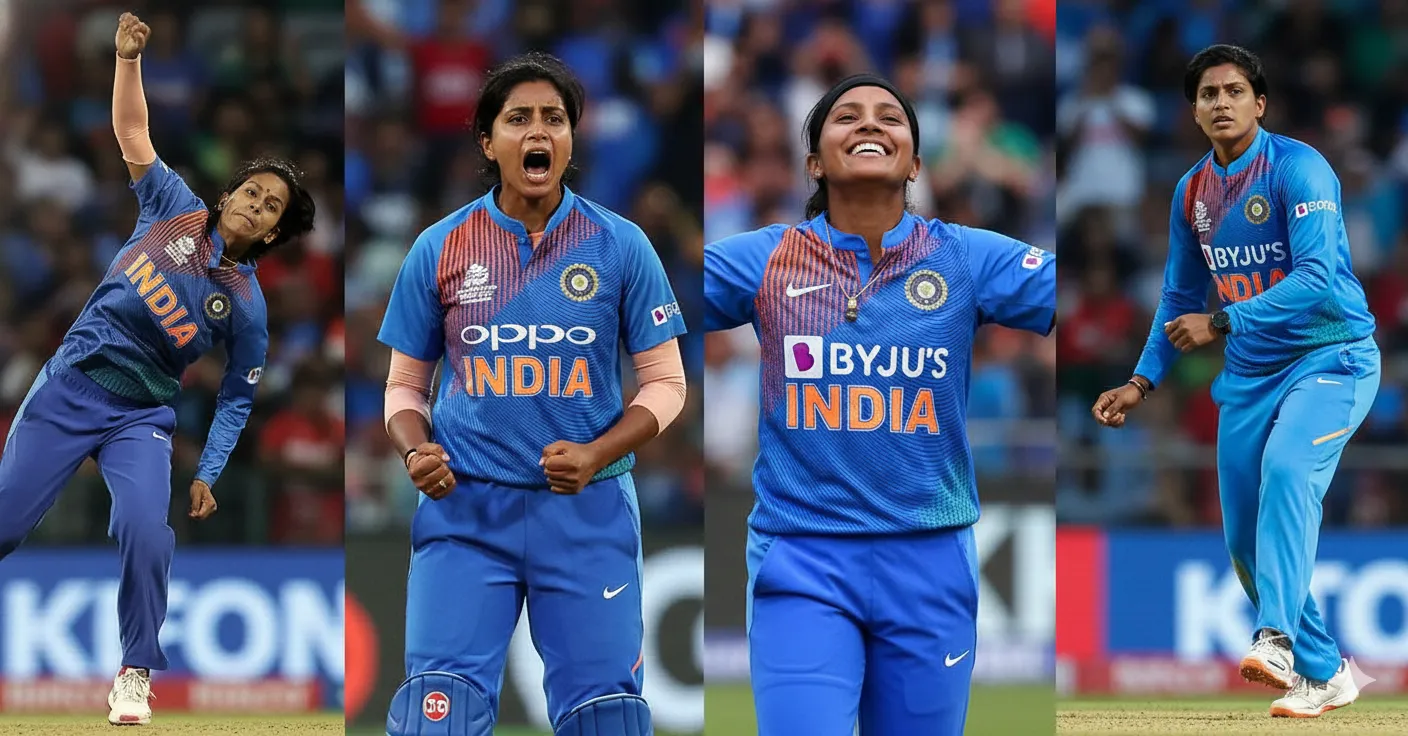
When it comes to Spin vs Pace in Women’s T20 Cricket, every captain, coach, and analyst has a favorite weapon. Some believe fiery fast bowlers set the tone with aggression, while others trust the deceptive charm of spinners to outwit batters. Over the years, the women’s T20 format has transformed, and so has the balance between pace and spin. But in the high-pressure world of 20-over cricket—what really works best?
The Evolution of Spin in Women’s T20 Cricket
In the early years of women’s T20 cricket, spinners ruled. Slow turners, dusty pitches, and batters still learning to attack spin made it a spinner’s paradise. Indian icons like Poonam Yadav, Deepti Sharma, and Australia’s Jess Jonassen mastered flight, control, and guile to dominate matches.
In India’s domestic circuit and the WPL, teams have leaned on spin-friendly combinations. It’s not just about economy rates—spinners often break crucial partnerships. The power of variation, especially with leg-spin and off-spin, remains unmatched.
Even globally, data from ICC T20 matches show that spinners average fewer runs per over (6.5) than pacers (7.4), proving their value in pressure moments.
Pace Attack: The Game-Changer in Powerplays
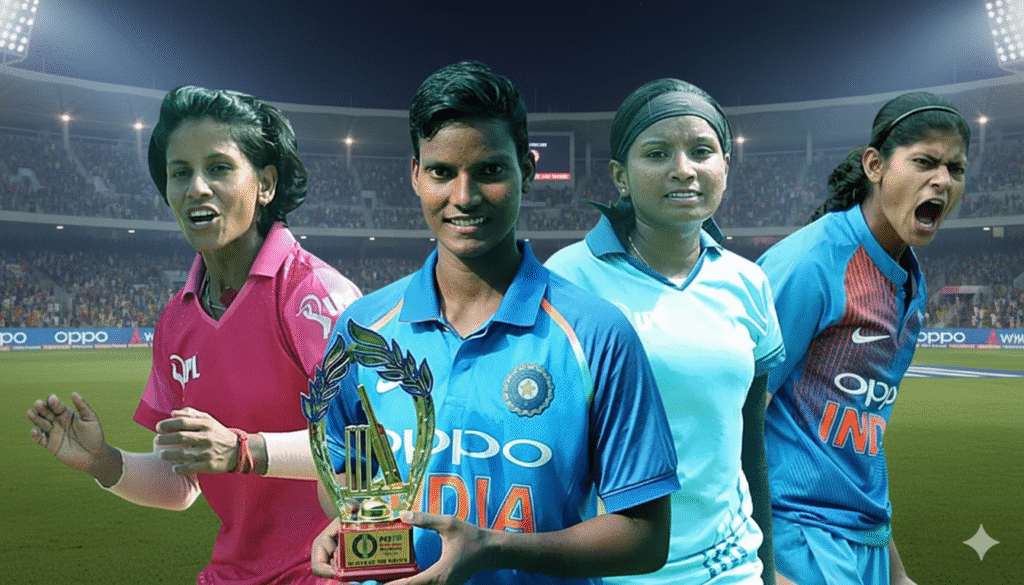
Yet, when it comes to pace in women’s T20 cricket, there’s no denying its impact. Fast bowlers like Shabnim Ismail, Renuka Singh Thakur, and Megan Schutt bring energy and intensity from ball one. In Powerplays, pace dictates rhythm—swing, seam, and bounce test even the best batters.
Modern women’s cricket is seeing more athletic, stronger pacers consistently bowling above 120 km/h. They strike early, restrict scoring, and force false shots—especially on bouncier pitches in Australia and South Africa.
While spinners control the middle overs, pacers remain lethal in the first and final overs, often deciding games in clutch moments.
Spin vs Pace in Women’s T20 Cricket: Statistical Breakdown
Let’s look at the numbers that drive the debate:
| Category | Spinners | Pacers |
|---|---|---|
| Average Economy | 6.5 | 7.4 |
| Average Strike Rate | 19.2 | 17.8 |
| Powerplay Wickets % | 25% | 65% |
| Death Overs Wickets % | 30% | 70% |
| Middle Overs Control | ✅ Strong | ⚠️ Moderate |
What stands out is the complementary nature of both. Pacers take early breakthroughs, while spinners build pressure. Teams like Australia Women, India Women, and England Women rely on balanced attacks—two pacers and two spinners—to maximize match control.
Why Spin Still Wins in Indian Conditions
In India, spin continues to reign supreme. From WPL pitches to ICC tournaments in the subcontinent, conditions favor slower bowlers. The grip, turn, and unpredictability keep even power-hitters guessing.
Players like Rajeshwari Gayakwad and Sophie Ecclestone have thrived in such environments. Their ability to vary pace, loop, and angle makes them match-winners. Spin’s tactical advantage lies in its versatility—it’s not just about wickets, but controlling momentum.
How Pace Is Evolving in Women’s Cricket
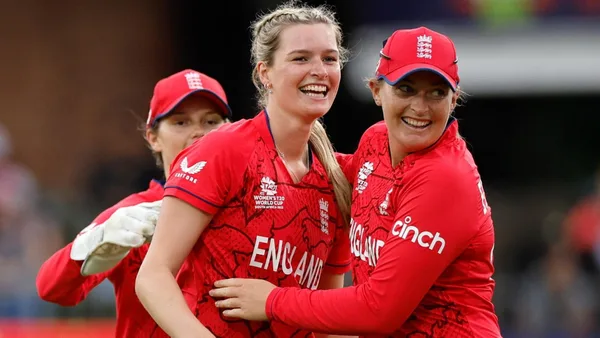
However, pace in women’s T20 cricket is no longer one-dimensional. With better training, biomechanics, and fitness programs, bowlers like Renuka Singh and Darcie Brown have shown how raw pace combined with control can dominate.
The modern T20 batter trains to handle spin better than ever before, so express pace—especially with movement—has become a key differentiator. The new generation of pacers is fast, accurate, and fearless, making pace a powerful weapon once again.
The Perfect Formula: Balance Wins Matches
So, in the eternal debate of Spin vs Pace in Women’s T20 Cricket, the truth lies in balance. The best teams don’t choose one—they blend both. Pace sets the tone, spin sustains the pressure.
A well-rounded bowling unit like India’s 2025 squad—with Renuka Singh’s swing and Deepti Sharma’s precision—shows how variety wins tournaments. It’s not about choosing sides, but about timing, adaptation, and smart bowling changes.
Conclusion
The contest of Spin vs Pace in Women’s T20 Cricket isn’t about who’s better—it’s about who adapts faster. In a game that evolves every season, versatility is the real winner. The modern T20 side thrives when both spin and pace unite to challenge batters, thrill fans, and define the future of women’s cricket.