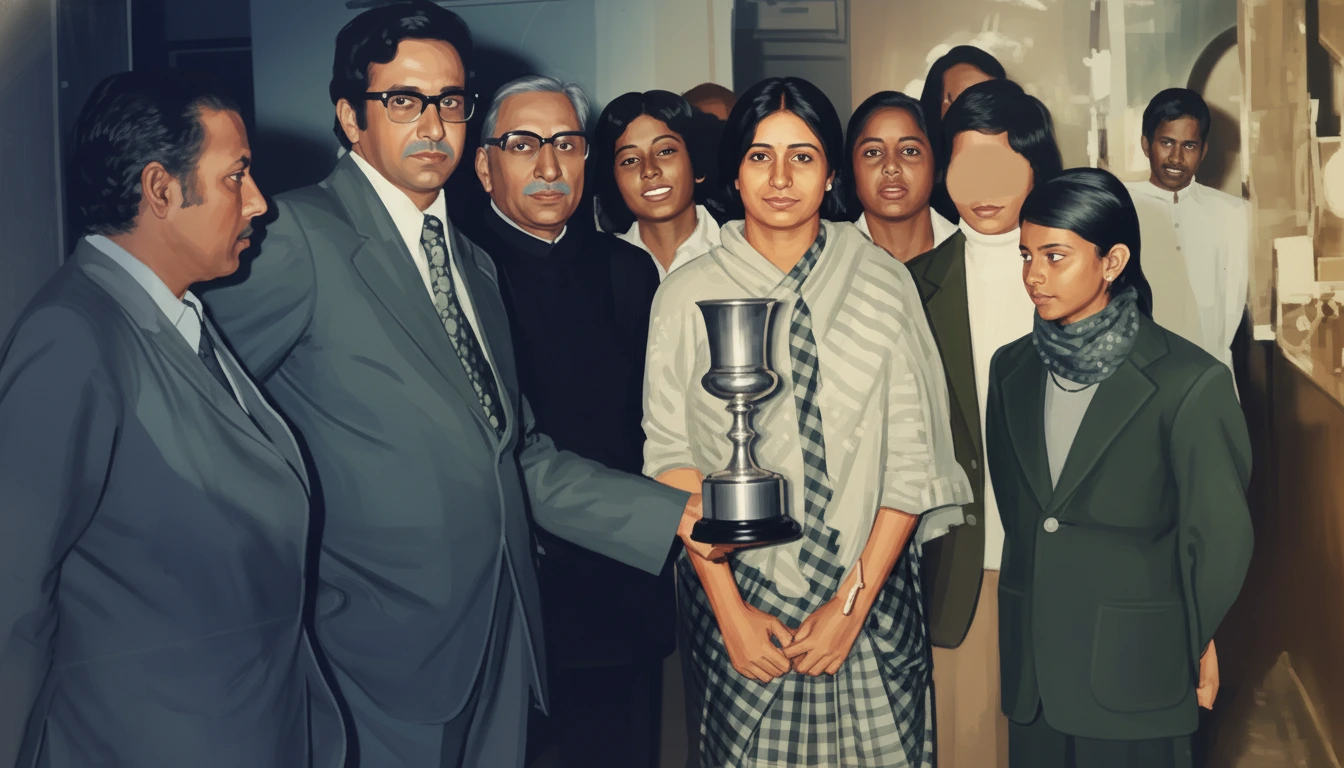
The story of Mahendra Kumar Sharma is the story of how women’s cricket in India went from “does this even exist?” to filling Eden Gardens with nearly 80,000 fans. At a time when there was no money, no structure and almost no social approval for girls playing cricket, Mahendra Kumar Sharma quietly decided that they deserved a proper platform. The women’s game that now creates IPL-style auctions and global icons rests on the foundation this one man built with almost nothing but belief.
Mahendra Kumar Sharma: Founding Women’s Cricket’s First Home
The biggest turning point in Indian women’s cricket arrived in 1973, when Mahendra Kumar Sharma registered the Women’s Cricket Association of India (WCAI) in Lucknow under the Societies Act. Until then, women’s cricket existed only as scattered, informal matches and college games; WCAI was the first proper governing body dedicated to women cricketers.
As the founding secretary, Mahendra Kumar Sharma began by organising India’s first national women’s championship in 1973, with just three teams from Bombay, Maharashtra and Uttar Pradesh taking part. What started as a three‑team event soon expanded to eight, then 12 and eventually 14 teams, proving that once opportunity appeared, talent and interest were never a problem.
Taking Indian Women’s Cricket To The World
For Mahendra Kumar Sharma, simply forming an association was not enough; he wanted Indian women to play international cricket and be recognised globally. In the same year that WCAI was formed, he pushed for and secured affiliation from the International Women’s Cricket Council and the English Women’s Cricket Association, putting India on the world women’s cricket map.
Under the watch of Mahendra Kumar Sharma, India hosted its first women’s international matches in 1975 when an Australian Under‑25 team toured for three Tests in Pune, Delhi and Calcutta. The senior women’s team played its first official Test series in 1976 against West Indies, marking India’s proper entry into international women’s cricket. Just a couple of years later, he helped India host the 1978 Women’s World Cup, and WCAI would go on to stage another World Cup in 1997, where almost 80,000 fans watched England vs Australia at Eden Gardens.
Also Read: Karuna Kumari Cricket India: Blind Teen Who Lit Up a World Cup Final
Sacrifices, Fundraisers And Sheer Persistence
The system Mahendra Kumar Sharma built was not powered by corporate sponsorships or big broadcast money; it ran largely on donations and personal sacrifice. Former players have recalled how he sometimes asked his father for funds, sold property in Lucknow, and even borrowed money to keep WCAI alive and running tournaments.
To raise awareness and funds, Mahendra Kumar Sharma organised creative events, including a friendly in Pune that brought Bollywood stars like Vinod Khanna together with cricketers to draw crowds and media attention. He even arranged for the women’s team to fly to Delhi to meet then Prime Minister Indira Gandhi, giving them their first plane journey and a rare national spotlight. These gestures may sound small today, but for that era, they were huge steps in making women’s cricket visible and respectable.
Legacy That Lives In Every Match Today
By the time the BCCI officially took over women’s cricket in 2006, much of the hard groundwork had already been done by Mahendra Kumar Sharma and his colleagues at WCAI. The national structure, interstate tournaments, recognition from global bodies and proof that fans would come to watch women’s cricket—all of this existed because he had fought for it for over three decades.
Former India captain and administrator Shubhangi Kulkarni has repeatedly said that “but for Mahendra Kumar Sharma, women’s cricket would not have taken off the way it did in India,” crediting him with everything from the first nationals to India hosting World Cups. Every time India’s women play a World Cup final, every time a young girl celebrates a WPL contract, she is unknowingly walking a path that Mahendra Kumar Sharma cleared long before the rest of the world was ready to believe in “cricket for girls”.
You Can Check Out More Sports News Here.