

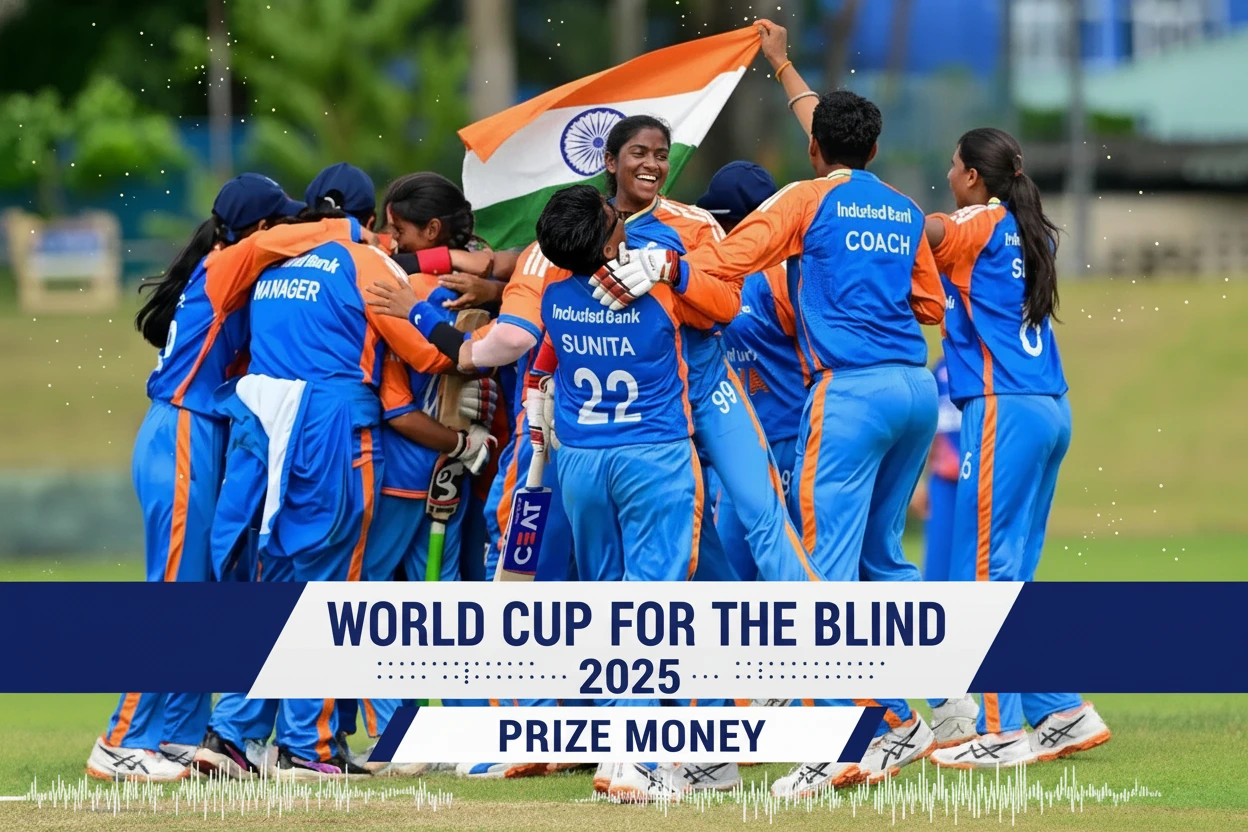
Women’s T20 Cricket World Cup for the Blind: A Historic First for the Sport
Women’s T20 Cricket World Cup for the Blind 2025 Prize Money. The Women’s T20 Cricket World Cup for the Blind is a groundbreaking global tournament that has transformed the landscape of disability sport and women’s cricket. Co-hosted by India and Sri Lanka in November 2025, it brought together visually impaired women cricketers from around the world to compete on an international stage with full World Cup status and recognition.
Women’s T20 Cricket World Cup for the Blind: Tournament Facts
The inaugural Women’s T20 Cricket World Cup for the Blind was held from 11–23 November 2025 across three cities—New Delhi and Bengaluru in India, and Colombo in Sri Lanka. Seven nations took part: India, Nepal, Pakistan, Sri Lanka, Australia, England, and the USA, playing a total of 21 league matches, two semi-finals, and the final under standard blind-cricket rules with B1, B2, and B3 categories and an audible plastic ball.
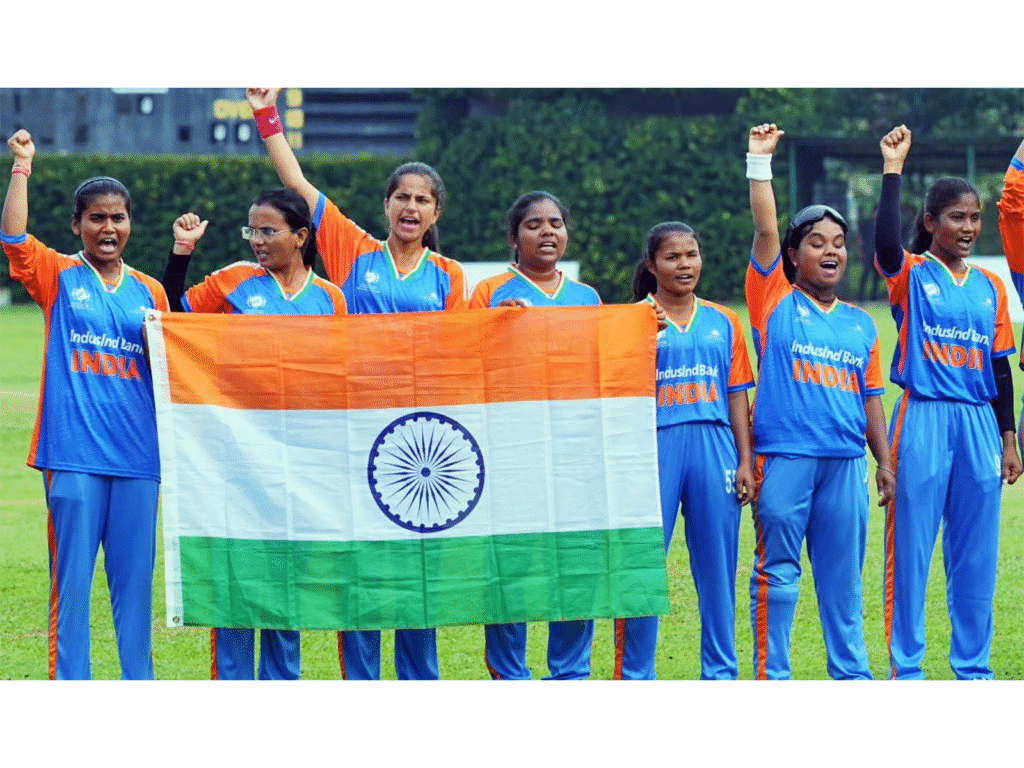
India’s Unbeaten Title Win at the Women’s T20 Cricket World Cup for the Blind
India dominated the Women’s T20 Cricket World Cup for the Blind, finishing the tournament unbeaten and lifting the trophy by defeating Nepal in the final at Colombo’s P Sara Oval. Bowling first, India restricted Nepal to 114/5, then chased down the target in 12.1 overs with 117/3 as Phula Saren top-scored with a match-winning 44* and totally blind players Anu Kumari and Karuna K making key contributions.
Why the Women’s T20 Cricket World Cup for the Blind Matters
The Women’s T20 Cricket World Cup for the Blind is more than a cricket event; it is a powerful platform for inclusivity, visibility, and empowerment of visually impaired women. Many players come from rural and underprivileged backgrounds, and the tournament has provided them with international exposure, financial support, and role-model status for countless girls with disabilities.
Women’s T20 Cricket World Cup for the Blind 2025 Prize Money
The financial figures highlight the passion of the players who compete largely for pride and recognition, reflecting the challenges faced by disability sports organizations (CABI, organizing the event).
| Award Category | Prize Amount (INR) | Notes |
| Total Prize Money Pool | ₹25,00,000 (25 Lakhs) | This was the budget allocated for all team and individual awards across the six participating nations. |
| Winner (India) | Distributed from the ₹25 Lakh Pool | The exact share for the winner is managed by the organizing committee (CABI). |
| Runner-up (Nepal) | Distributed from the ₹25 Lakh Pool | The remaining major share of the pool. |
| Individual Player Reward | ₹1,00,000 (1 Lakh) | An event sponsor pledged this amount to each individual player on the winning Indian squad in recognition of their achievement. |
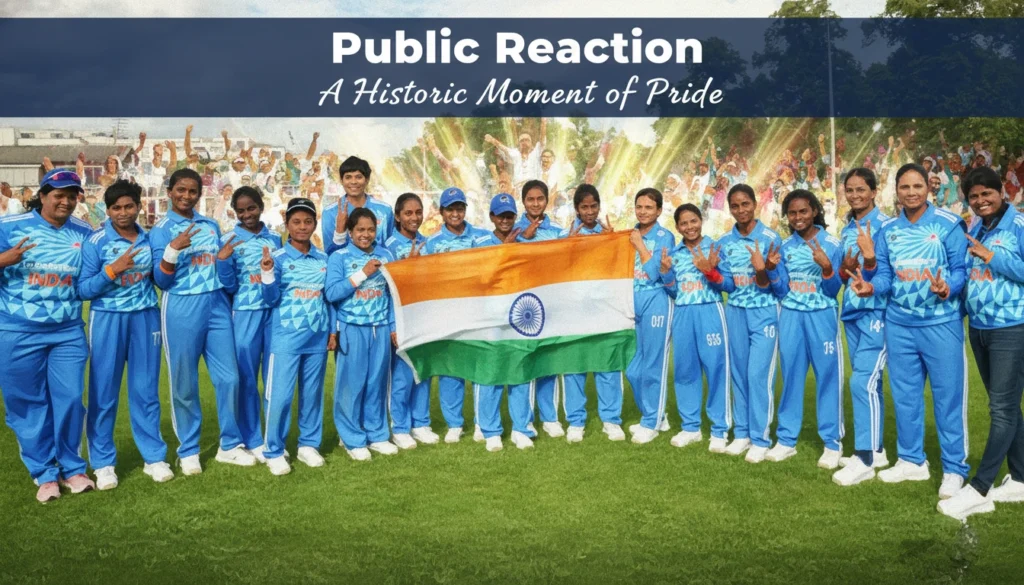
Public Reaction: A Historic Moment of Pride
The victory was immediately hailed across India as a landmark sporting achievement, emphasizing the players’ hard work and determination despite immense challenges.
Political and Sports Leadership Praise
The win received immediate high-level recognition, signaling the importance of the triumph:
- Prime Minister Narendra Modi congratulated the team on X, calling the victory a “shining example of hardwork, team work and determination.” He further highlighted the fact that the team remained unbeaten throughout the series, stating, “Each player is a champion! This feat will inspire generations to come.”
- ICC Chairman Jay Shah lauded the team’s achievement, noting that the event “redefines the limits of ‘ability'” and inspires differently abled athletes worldwide.
- Chief Ministers and State Leaders across India, including the Chief Minister of Chhattisgarh and the Chief Minister of Tamil Nadu, issued public congratulations, calling the team “a beacon of national pride.
Format and Unique Rules of the Women’s T20 Cricket World Cup for the Blind
Matches at the Women’s T20 Cricket World Cup for the Blind follow adapted rules: an 11-player team must include a mix of B1, B2, and B3 athletes, underarm bowling keeps the ball rolling, and a special white plastic ball packed with ball bearings helps players track it by sound. For safety and fairness, B1 batters use runners and every run they score counts as two, reflecting the extra challenge of playing without sight.


Leave a Reply